The hardest part of running a robotaxi fleet isn't the driving — it's the charging. Tesla's Cybercabs can navigate themselves to a Supercharger, position themselves, and wait. What they can't do is get out and plug in a cable. For now, that final act is performed by a human employee, which is why Tesla has just revealed its plan to hand the job to a robot.
Today, humans do the plugging
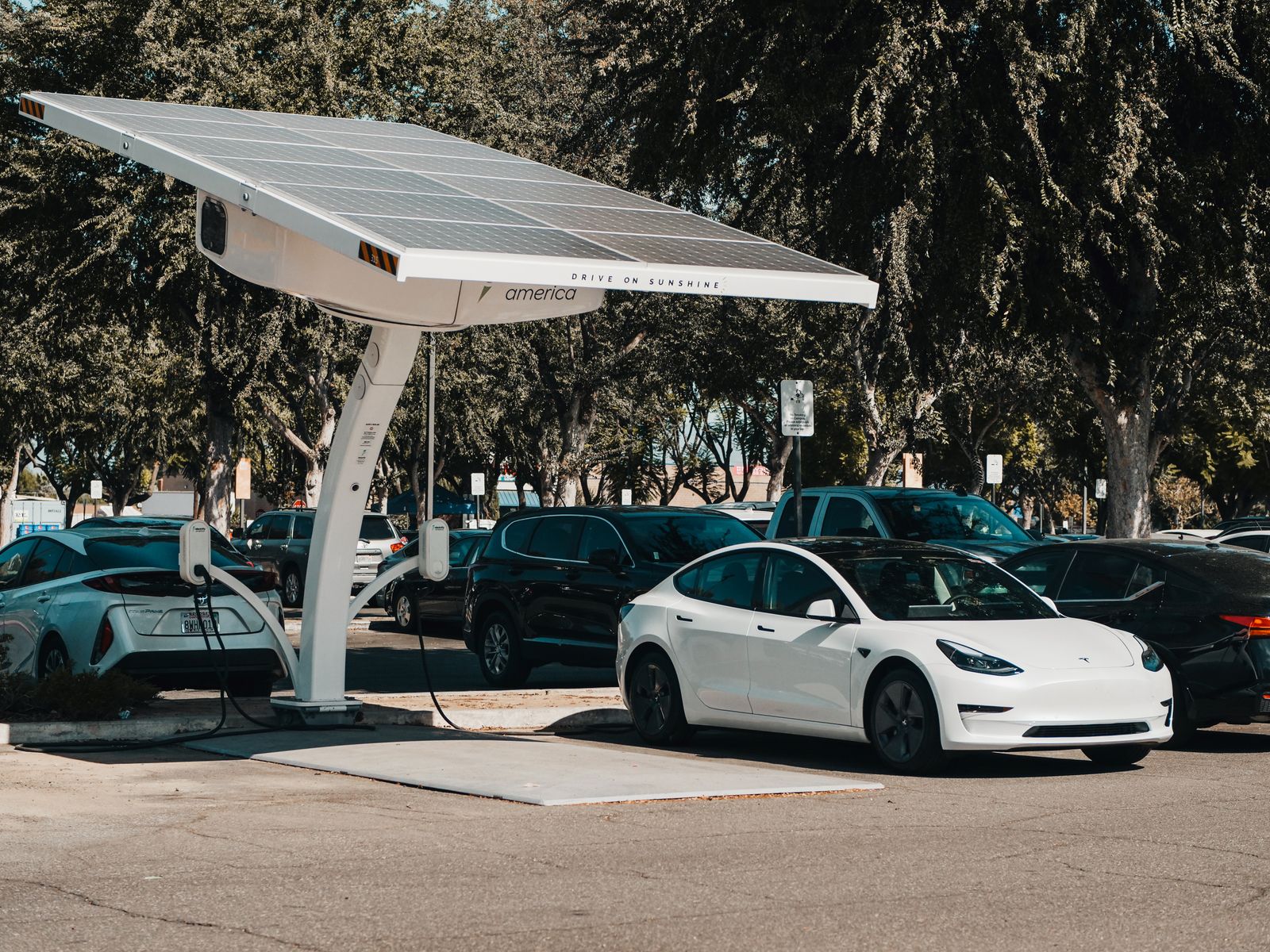
The gap showed up clearly in a recent video from an Austin Supercharger, where a Tesla staffer walked between arriving Cybercabs and Model Y robotaxis, plugging each one in — and even nudging some cars forward when they hadn't parked close enough to the stall. For a service sold on the idea of "no human needed," charging is still very much a manual chore.
That's not a quirk; it's a design constraint. The Cybercab doesn't support AC charging at all, so a Supercharger and its NACS connector are the car's only option for now. Tesla kept the charge port hidden in the rear bumper precisely because the vehicle still needs to tap the existing fast-charging network while the company builds something more automated.
Optimus steps in as the stopgap
In an interview with Munro Live, Tesla VP of Vehicle Engineering Lars Moravy and Cybercab lead Eric Earley said the plan is to have Optimus take over that plug-in role. "Hopefully, Optimus will help us with that shortly," they said — the first time Tesla has placed the humanoid robot directly inside the Robotaxi workflow.
Optimus is engineered for exactly this kind of repetitive, dexterous physical work: grab a cable, locate the port, connect it, and repeat. It's a natural fit for a hub that already uses purpose-built car-cleaning robots and is meant to run with as little human involvement as possible as driverless miles climb.
Wireless charging is still the goal
Optimus is explicitly a bridge, not the destination. Tesla has already won FCC approval for wireless Cybercab charging and is planning an Austin robotaxi hub outfitted with 80 wireless charging pads. Once that infrastructure is live, the cars would simply park over a pad and charge — no cable, no robot, no human.
That's the cleanest version of the future Tesla is selling: a self-sustaining loop where cars drive themselves, robots maintain and recharge them, and hubs need only occasional oversight. But wireless charging at fleet scale is still a build-out problem, not a solved one, which is why the plug-in robot matters in the meantime.
The timeline says "not next year"
Don't expect to see a robot waving a charge cable at your local Supercharger tomorrow. Tesla only recently began early Optimus production at its Fremont factory, with the first deliveries to corporate customers planned for 2027. Even if Optimus starts working Robotaxi charging sites before then, the broader rollout of wireless Cybercab charging is likely further out.
Moravy and Earley also hinted the robot could eventually do more than plug in cars — potentially servicing the vehicles or assisting in delivery. They grouped the Cybercab, Optimus, and the Robovan together as examples of what Tesla calls "physical AI," with the robot as the connective tissue between driverless cars and the facilities that keep them running.
What it means for charging infrastructure
Tesla isn't the only company confronting the "who plugs in the robot" problem. Robotaxi fleets charge constantly, and every approach to automating that step — robots, wireless pads, or dedicated depots with staff — carries a different cost and speed trade-off. This announcement is a signal that Tesla sees its Supercharger network as the backbone of its robotaxi service, and that it's willing to build automation on top of it rather than wait for wireless charging to arrive everywhere.
For everyday EV owners, the relevant parallel is simpler: the robotaxi boom is adding demand to the same charging infrastructure regular drivers rely on. Our guide to Level 1 vs Level 2 vs DC fast explains why DC fast charging is the scarce resource, and Best EV Charging Networks breaks down how the major networks compare.
Bottom line
Tesla's Robotaxis can already drive themselves; getting them recharged is the last manual link in the chain. Optimus is the stopgap, wireless charging is the endgame, and the Supercharger network is the foundation both will lean on. For now, the takeaway is that "driverless" still has a human — and soon, a robot — standing at the plug.
Sources
- Not a Tesla App — Tesla's Optimus Robot Will Soon Plug In Robotaxis to Charge
- All Things Elon — Tesla Taps Optimus to Plug In Its Robotaxis at Superchargers
- Not a Tesla App — Tesla Is Currently Charging Driverless Robotaxis by Hand
- Not a Tesla App — Tesla Wins FCC Approval for Wireless Cybercab Charging
- All Things Elon — Tesla Starts Optimus Production, Eyes 2027 Customer Deliveries